I’m impressed by how many posts in my Facebook feed these days appear to be AI generated, including both the text and accompanying photos. Many are clearly pushing falsehoods, and some attribute things to political figures and celebrities who never said such things.
I admit, I use an AI LLM (large language model) to help write posts, but my process is to completely write the post myself based on the truth as I know it, then I run it past AI and ask for a fact check on what I’ve said to keep me honest. A lot of times the LLM wants to rewrite the post, supposedly to improve the grammar and flow. I draw the line there. I may edit my post with some of its suggestions, especially grammar and facts, but I won’t let AI write for me.
AI-generated narrative text often has telltale signs once you’ve read enough of it, but even experienced readers can’t always be sure. Detection tools can help, though they’re not perfect. Clearly social media platforms can use their own AI to detect synthetic content. I stop short of saying platforms should ban it—because that risks a slippery slope toward limiting free speech—but they could at least flag posts with an “AI probability” rating to promote transparency.
On YouTube it’s a different story. Many channels are using AI narrators and AI photos within their videos. In most of those cases, I see it as a practical thing to do. People want to get their ideas out there, they write their own script, but they may not have a good speaking voice, good audio equipment, a budget to pay for voiceovers and stock photos, or even enough command of English to narrate their own videos. YouTube now asks creators to disclose when realistic content is AI-generated, which seems like a fair and responsible approach.
I ran this post past an LLM and let it fold in factual corrections—I left in a telltale sign AI touched the post, can you find it?
Back in the 90’s I took up Tai Chi (think of slow motion kung fu) mainly for stress reduction. I’d go to the Tai Chi center in Rochester, NY. It was fun, you’d wear a tai chi outfit and special shoes, and go through a routine of flowing moves.
Now I’m getting older, my body is pretty stiff, I need to lose weight.
So I’ve started a program of doing “chair yoga” and “tai chi for strength and balance”
Both are low impact exercises, but they get results, and perfect for older persons.
With chair yoga, I already see more mobility, as the exercises are mainly stretching and flexibility ones.
With Tai chi, the strength comes from the slow motion movements and holds of positions, and the balance comes from challenging your body to remain balanced while holding those positions.
In fact I thought I already had good balance, already I see I need work.
After each workout, instead of feeling tired (Like i would riding an exercise bike) I feel like my body is energized and refreshed.
My last post was in August 2024, and I’m sorry to say that I haven’t had much time to do anything for a year. My wife was diagnosed with dementia June 2024, and I have been her care giver, so not a lot of time for anything else.
I got a notice today that the domain for this blog needed renewing, so I had to decide quickly whether to let it go or continue.. I decided to continue because by now I have gotten some help to come in to take care of my wife a couple days a week, and so now I’ve been able to do some hobby things I couldn’t really do for the last year.
This blog has revolved around my varied interests, basically whatever I’m working on, and so I think I can continue to do that, plus possibly share some thoughts about what’s involved with caring for a loved one with dementia.
I’ve learned a lot in the last year about care giving, and can say, life ranges from easy, to hard, to very hard. I have learned things that you should do, and come up with a few things of my own that can be done to make things easier, and I’ll try to share that with the caution saying I’m no expert.
For hobby time, I’ve gotten back in to music, since I can do this while my wife is napping or with an aide. I tried to go back to electronics… that’s harder to do, I can find a few minutes here and there to design, but building and debugging take too much attention.
I can say I have used my technology skills to come up with a few things to make things safer for her, and easier for me. Mostly that involved morphing my home automation system (Openhab) into being an aid for myself and aides along the lines of monitoring, alarming, and reminding things related to dementia care giving.
Speaking of phases… for years we used one of those, not to be named, brands of coffee maker that uses individual coffee “pods”… You make one cup at a time.
Well there are problems… One problem: It’s slow, so for a party, we still had to use a percolator.. Another problem is that you generate a lot of waste with those plastic pods, and also the coffee grounds, which will normally decompose are sealed inside that plastic.
But the other big problem is the machines don’t last very long. Like for us, based on the amount of coffee we brew, the machines were lasting only a year, or maybe 2. So that’s more expense, and now a big hunk of electronics waste to get rid of.
So, fed up with that, I bought a drip coffee maker… This maker has metal foil, reusable baskets for the grounds, and it has 2 sides. One side is for single cups, and the other side is for a 12 cup pot.
Now the morning coffee ritual… Get up, and smell the nice fresh ground coffee as you put 5 table spoons of it into the basket… fill up the reservoir, and in a few minutes you have 6 cups of coffee!
Usually I write about something technology based, but here is just a post about life.
When the pandemic started, and we were stuck at home all the time we instituted two things… Eat a little ice cream every day, and always keep fresh cut flowers in a vase on the dining room table.
Well this Valentine’s day we expanded, I bought a special flower arrangement for my wife and once those flowers withered, we decided, hey, let’s keep two vases of cut flowers going.
So now we have a vase of flowers in the living room too… and it’s just nice.
The whole image covered the entire east coast USA. I cropped the usable piece out. The raw image looks like white clouds on a gray background. Processing software inserts land and water coloration and state borders and precipitation probability.
Ok, Here is more info about receiving weather satellite images…
What you need (for NOAA APT and Meteor LRPT sats): 1. a radio that can receive in the area of 137 to 138 MHZ 2. a suitable antenna, tuned for that band 3. some way to capture the audio 4. some software that converts the captured audio to an image.
Oh and you’ll need to somehow get satellite tracking information
But in my case specifically I’ve gotten and done this: 1. got an RTL-SDR Blog V3 sdr radio (already had one for short wave listening). This is a USB device, you hook an antenna to it, and hook it to a usb port, you can use the suite of software in the rtl_sdr linux package to do basic radio listenning 2. Well I’ve been in the antenna hacking stage, right now I have it hooked up to a dipole antenna of mine that just happens to have low SWR in the area of 137.5MHZ. But ever hating fussing with antenna construction, I ordered what’s called a V-Dipole built just for NOAA weather sat reception. So a V-Dipole is just a dipole but the two elements in this case are set at an angle of 120 degrees to each other, rather than having them in a straight line. By doing this it basically get omnidirectional reception and also reception from UP, where the sats are. The actual antenna to use for this is a helical antenna built for the weather sat band, Unfortunately I cant’t find clear instructions online to build, and I see no one selling one, I did see at a legit ham radio store site, that you could pay $300 for a built one for another band. Uhm… No. 3. and 4. To capture the audio and process it I am using Raspberry-NOAA-V2, findable on Github. basically you devote a raspberry pi 2 or greater to have a fresh OS install, and install that software, It does the full job of tracking sats, and listening at the right time, and converts the audio to sat images with various “enhancements”.
NOAA sats, NOAA 15, 18 and 19, are in a polar orbit, sun synchronous , meaning they fly pole to pole, with a period of about 90 minutes, and they keep themselves aligned with the sun, so that their images always have the same lighting on the day side. They don’t have a normal camera in them, they have more or less a single line Earth scanner in them… so as they fly they are scanning a line of the earth perpendicular to their path, and they put out about 2 scan lines a second. The signal is analog, AM modulated on a 2400hz carrier, the whole shebang is FM modulated somewhere in the 137mhz band, a different channel for each sat. The Meteor sat is a Russian sat that uses a digital encoding, but it’s the same basic scanning idea, just a different scan line encoding.
You don’t really need to know all that, you use software to decode the signals, and generally you can expect NOAA images to be like old time TV, sometimes a clear signal, sometimes snowy. And the Meteor, being digital, will be clear, but with black lines where the decoder failed to hear a decent signal.
Well, Raspberry NOAA V2 (RN2), is a great package that just handles everything for you to track, record and decode the 3 NOAA sats and a Meteor sat. I’m running mine on a headless RPi 4, with minimal OS (no GUI). RN2 runs a web server on the pi so you can check schedules and look at captured images.
Well we have to talk about the Meteor M2 saga.. It seems that Meteor M2, was giving great results — looking back at other people’s posts and videos about it, but it has failed… and it’s replacement ? Failed. So now we’re up to the newly launched Meteor N2-3. Support for that sat in RN2 is in beta development. I took a peek at that code, and found that, yes, once it is released I can expect amazing sat photographs from it.
And we should talk about the realities of antennas and Raspberry PIs….
I have played with radios since I was in grade school. Always putting a lot of energy into the question — why is my reception so bad? I have played with antennas and long ago came to the conclusion that they are magic, and a kind of magic I can’t grasp. Sure there are formulas, and calculators, and simulators all for designing the perfect antenna, but when it comes down to it, you never have the perfect antenna, and you never have the perfect antenna installation.
So these few days have been spent fussing with antennas. And as I said.. I ordered one, and hope it does it’s magic, but in the mean time, this above is the best image I got so far, and it was done with a hacked together v-dipole from an old TV rabbit ears, at ground level (Some say go as high as possible, some say no.. it needs to be between .4 and .6 meters off the ground.)
Mind you… as far as antennas and SDR and RPi’s go… the PI itself is a noise source. USB is a noise source… so I have two chokes on the USB cable to the SDR dongle, I have a choke on the power going in to the PI, and I have everything stretched out so the SDR dongle is as far from the PI as possible, and the antenna is as far as possible away.
Earlier today, I used my 40M OCF Dipole, (installed in my garage):
So you can see my motivation… that image says I have the potential to get images from the gulf of mexico up to way north in canada…
My next steps: Once the actual antenna comes in, install it properly. Also I have a 137mhz band pass filter on order. Also have a much better radio on order. Ultimately this is all going into a waterproof box in my garden. I had put together a 12v battery, a solar panel and a charge controller, for a past experiment… Now it will be re-purposed as the beginning of my garden weather station.
What a pain they are. Sure it’s nice to have your local time, and it’s convenient for lunch to be at 12:00, but seriously in our connected age, we’re constantly having to convert time zones… Say something like “I’ll do a facebook live at 1pm” and someone will ask “I’m in pakistan, what time is that?”
So also repeatedly as an on and off HAM radio operator, I’m constantly torn between local time and UTC. International radio stations use UTC, a lot of HAM support uses UTC….
Now years ago, I gave up AM/PM time and switched every device I use to 24 hour format… It’s second nature to me now, but yes… I do a rapid mental conversion to AM/PM time whenever I have to relate to something on a schedule, like TV listings, or just talking to “normal” people about when to meet.
So today on my RaspberryPI that is dedicated to satellite reception, I switched it’s time zone into UTC. Why? Because satellites know no time zone, they are on UTC… and many satellite predictors out there use UTC… Sure some use your local time, which now is inconvenient…, but for the most part, when I get a prediction a sat is going to make a pass starting at 02:53UTC, I can tell my raspberry PI to do something at 2:53UTC, without having to do the dumb mental conversion to local time.
A benefit of switching to UTC… if I talk to someone in London, I’ll be naturally be using their local time zone.
So the question is, how far should this go? Like should I switch my phone to UTC? Is that even possible?
We went out taking photos yesterday, and on the way back, we passed a little pond that’s on one of the streets we take. From the car I could see a great blue heron standing in the pond.. So it was exciting to have the camera in the car for this opportunity.. I got out of the car and took shots as I came closer to the pond, but Herons, are skittish birds, so it quickly moved away before I got close enough — 200mm is just not enough for skittish birds.
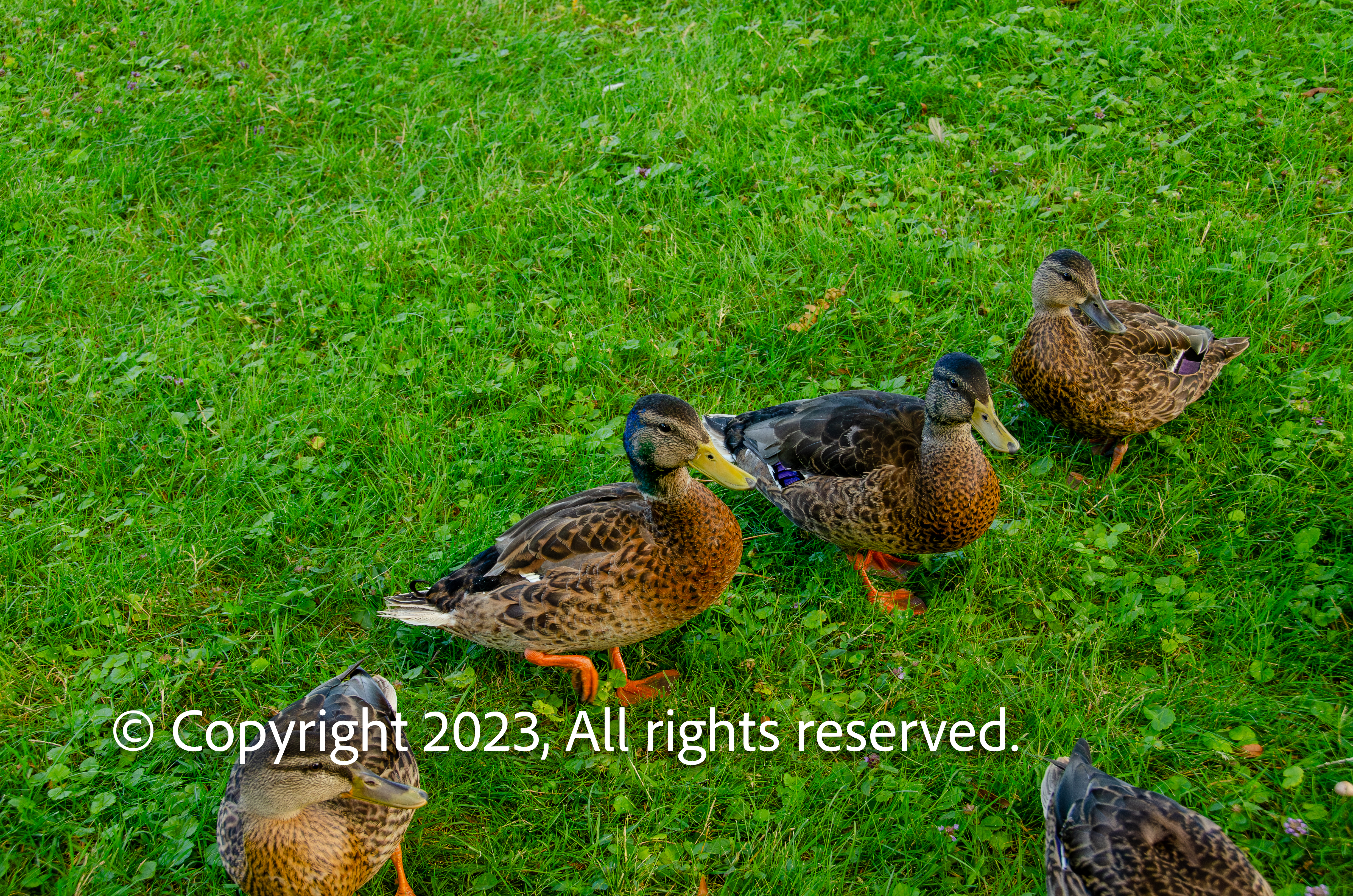
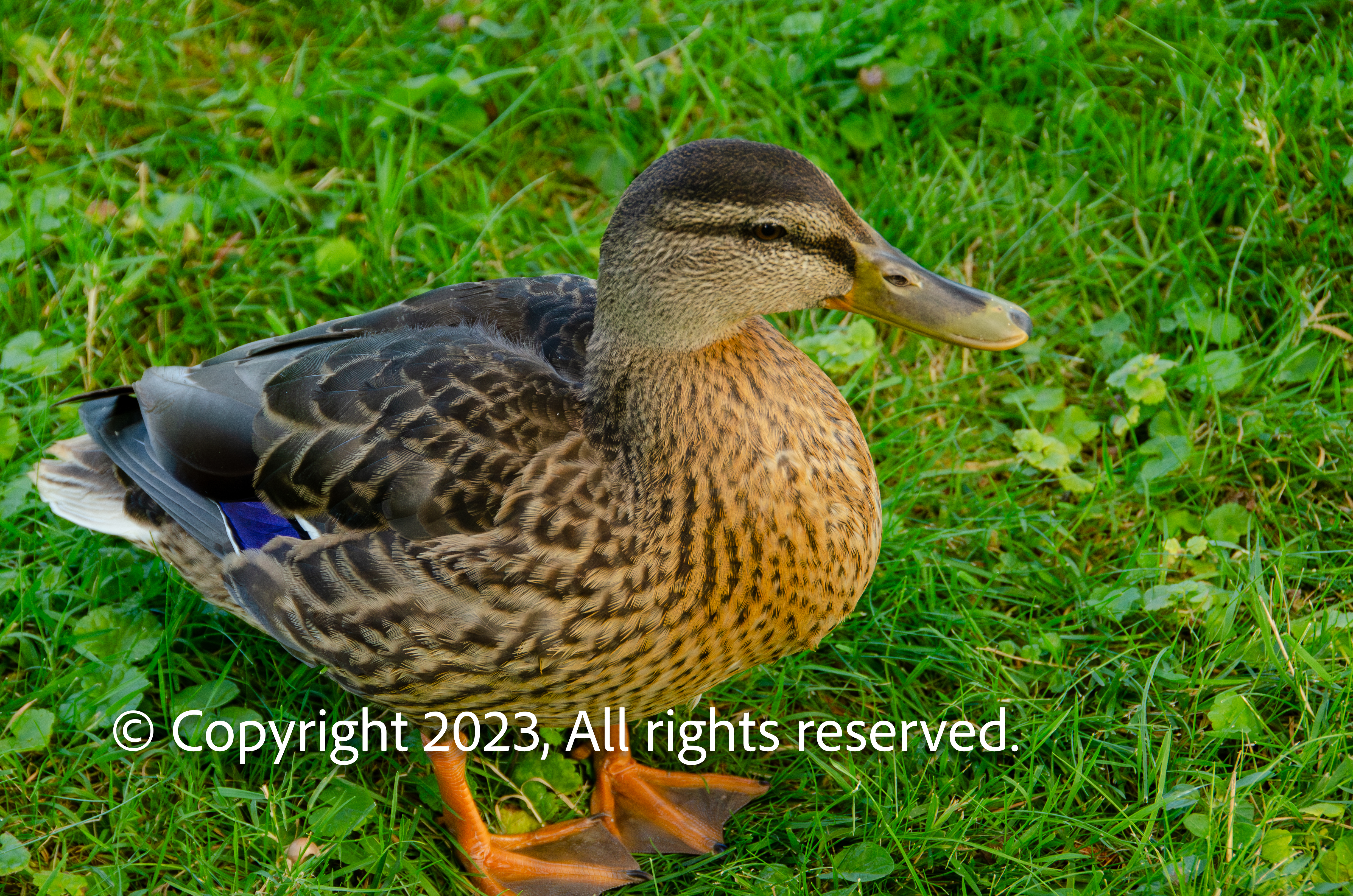
But as I stood on the grass next to the pond, I noticed a small flock of mallard ducks, waddling towards me. How amazing. Obviously they know the routine.. a human stands there, they come over and get fed something. Unfortunately I had no food for them, but I got a bunch of shots and a few good ones (at end of the post).
I started thinking.. Hey I could get a neat low angle video of these ducks milling around if I brought some actual duck food next time… So I looked in to what is good food for a duck and found out… ITS NOT BREAD… So it’s going to take some time to pick a duck feed for them… I’m not really looking forward to handling meal worms… but maybe cracked corn…
So this afternoon, we passed the pond again, and the resident Canada Geese flock was there… for a fleeting moment I thought I could go home and get the camera and come back for some closeup shots of the geese, but I saw the situation… There’s a flock of geese, and one individual goose off to the side with its head straight up… That one is the lookout, and I’ve learned from experience, what a wild goose chase is… That’s where you get too close to a flock and the lookout , wildly chases you around as you yell, “help! help!”
These photos were taken with my D7000, 18-200mm lens set to whatever focal length needed, F11 and 2000 ISO… So you say, ouch that’s a pretty high iso for outdoor photos, but not really, It was in the shade, that lens works really well at F11… but also given ducks are potentially moving targets, I wanted a pretty high shutter speed… So I set the camera to A mode, and turned the ISO up until I had at most 120’th of a second for speed. There was some minor grain in the photos that you could only see with magnification, but Light Room Classic’s new AI denoise works like a charm.
The reason I ask this, is the other awful hour of the morning I was up taking star photos, I noticed 3 very large looking deer across the street munching on something. Like my neighbors shrubbery, or maybe even the contents of their trash can…
Now it is a well known fact that animals — even humans– can sense when someone is staring at them from behind. And so they rather quickly stopped their munching and turned to look at me.
Now I have no way to judge the expression on a deer’s face, or it’s body language to know how malevolent they might be. So what I did was say, in a calm tone… “GO AWAY”.
It didn’t phase them. So we ignored each other for the rest of my time taking photos.
The next night, my security camera caught them, in the morning after sunrise, roaming on my lawn and inspecting my garden. So now I got a good look at them… One of them had horns, and was larger, the other two smaller ones, had no horns. I have no clue about deer anatomy or development, is this the mother and the baby deer? Or a guy and his two girls? In any case, I definitely do not want to come in close proximity with a horned animal.




 Stefanos's Blog