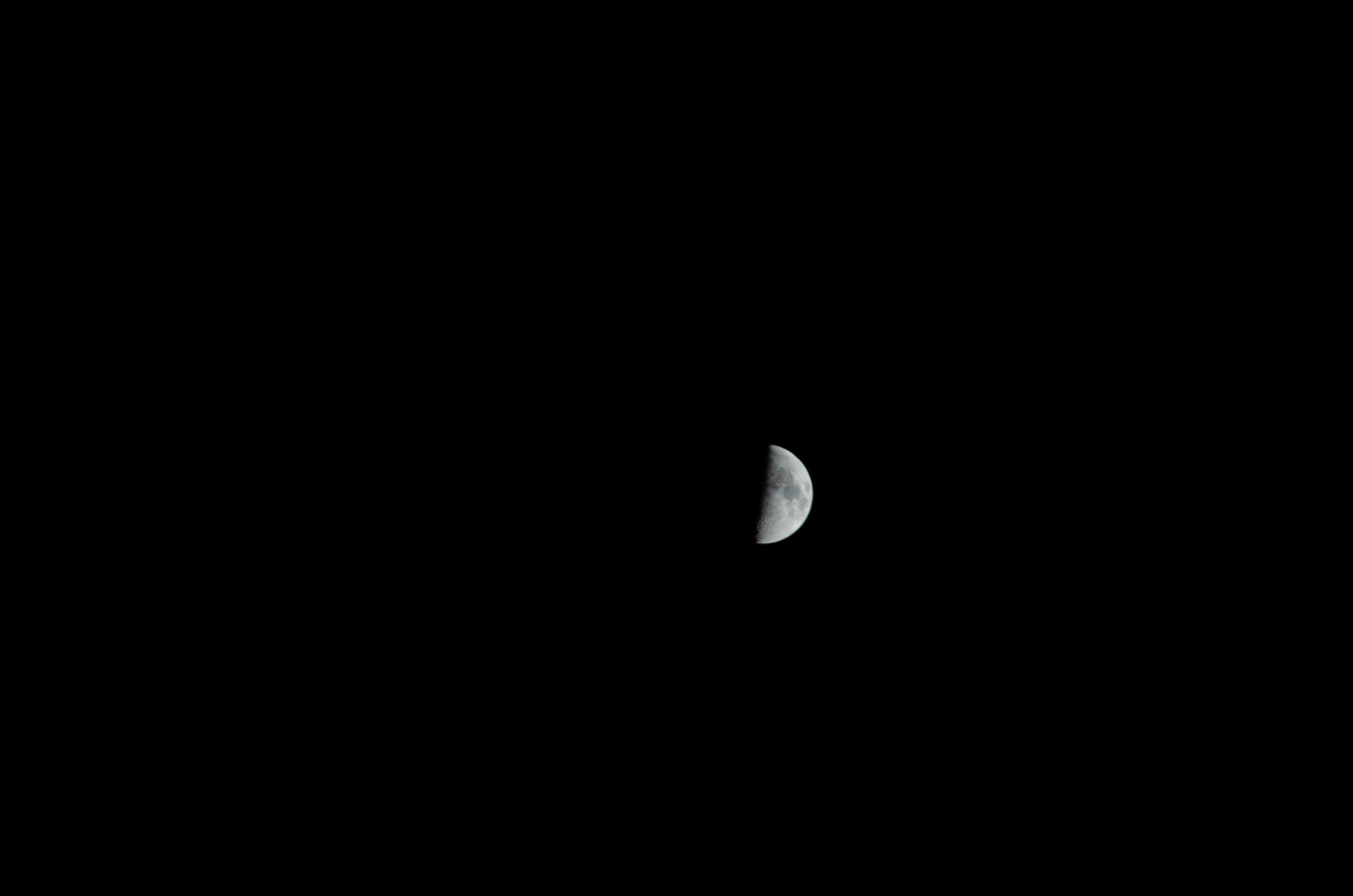
As I said in another post, I tried to photograph the Moon last night.. This was the best I could do.
I have no clue on how to focus on the moon. I have a Bahtinov mask, but that needs a bright star… it doesn’t work on the moon itself.
Don’t look too closely… It seems ok… zoom in… it’s a blur. Wow and I de-noised and sharpened the heck out of it. Oh and the best I could do was 200mm focal length. Which other web pages say is not long enough.
Here is the first astro photo I took using the Astra V2.1 tracker that I built. I’m using a 40mm lens and ten 30 second exposures (The max exposure time of my camera)… It seems to work nearly perfectly even though I aligned the mount using my iphone compass and bubble level. Today my external intervalometer comes and I’ll be able to test longer exposures with this lens and the tracker. Right now my 200mm lens is just too heavy for the tracker, I’ve ordered a finer lead screw for the tracker to see if that will help for that lens.
The bright star near the center is Altair, my favorite star. and I focused this manually — though my near and low light vision is pretty bad. Soon I’ll be testing a Bahtinov mask that I 3d printed to see if I can improve focusing.
Well, it looks like it’s been since 2017 that I wrote here. I gave up on my other blogs in the mean time, and also have been basically video blogging on youtube (stephentoons). Well I’m back here now and the topic is Astrophotography for the near future! So, if possible, I’ll post any interesting photos I make and write possibly interesting stuff about them. The first one is, well, though I have a LX200 10″ telescope, I’ve started doing astrophotography with my D7000.
I have a few lenses, and I built an Astra V2.1 star tracker mount for the camera. Here is a photo I did last night (morning actually) where I accidentally caught something interesting:
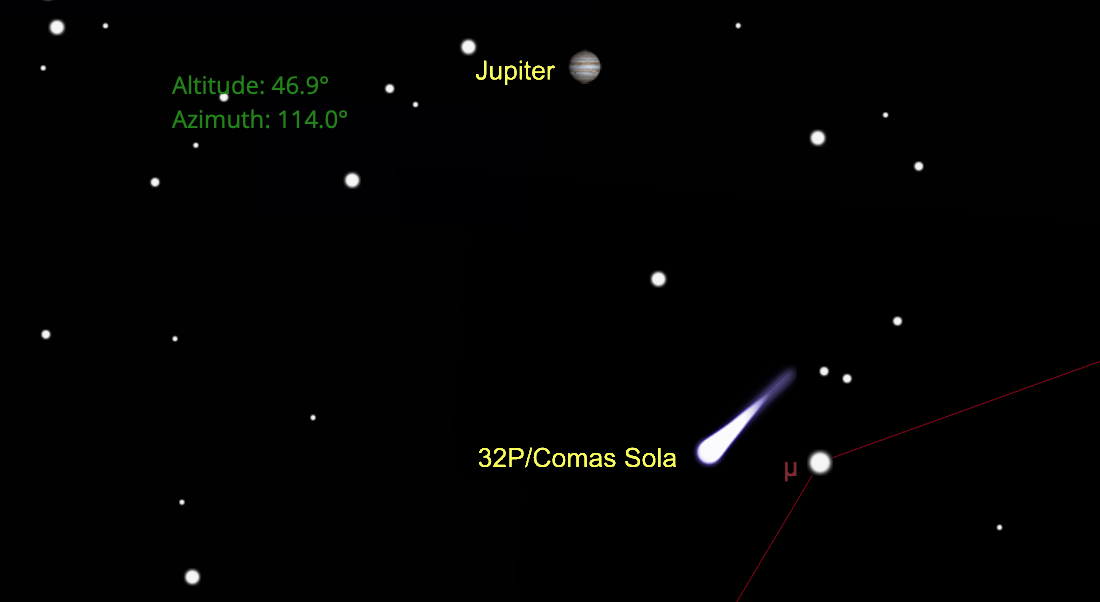
It’s not using the tracker, has a bit of trailing in it, at 1/2 sec exposures at 100 ISO, 200mm focal length, 50 photos starting at 5:14am EST. The bright dot is Jupiter, along with some of it’s moons. the green smudge below it and to the right a bit is a comet… Which I managed to identify as 32p/Comas Sola. Here is a chart from theskylive.com:
also verified by plate solving on astrometry.com.
Well I think that’s pretty good for the second night out with the camera. I’ve used the LX200 for some astrophotography but with a 2500mm focal length and a DX camera the field of view is pretty small. using smaller focal lengths gives a bigger view of the sky allowing to capture coincidences like this.
This video is made of the aprox 50 frames I shot. shows the comet moving to the left as the stars and Jupiter are rotating to the right.



 Stefanos's Blog