


It would be Dino the Dinosaur. Certainly the most relatable dinosaur I’ve known about.
Author: Stephanos Blog
Update on the Solar Tracker/Logger
Well I did choose to go with an ESP32, I’ve already written the code, which I’ll tweak once everything is together. And I did get the first draft of the 3D printed parts:

Which consists of a:
1. Base — that fits on an Arca tripod mount (I borrowed the arca part from another person’s design. If I make this project public I’ll let people know where to get the arca mount that they can add to my adaptor to make the base.
2. Rotating Base — this is the azimuth axis.. it swivels on a single skate board bearing, direct driven by a stepper.
3. A Sensor Head — This holds 4 photo resistors, and has baffles that will cast shadows on them if the sun is not aligned. So basically if any pair of sensors reads the same voltage, they are both in full sun and so aimed in that dimension at the sun. as the sun moves, a shadow will be cast on one of them, the voltages will differ in the pair and the code steps the appropriate motor to get the voltages equal again.
4. A tilt platform — This is the alt axis. This platform rotates on 2 skateboard bearings, one end is direct driven by a stepper. The sensor head attaches to this. Also there are recesses to put the ESP32 and magnetometer/accelerometer.
What the code does is sense the voltages on the circuits the sensors are connected to, step the motors to equalize the voltages — this aims the tilting platform in alt and az at the sun, then reads the mag/accel sensor for heading and tilt. It will run a web server and allow a client to get the latest: alt, az and time those readings were taken. (I synchronize the ESP32’s clock by NTP to my NTP server in the house.) A raspberry pi will act as the client, and log sun positions, and yes, perform the necessary adjustment to go from magnetic heading to true heading.
What’s missing? Well right now there is no place for the stepper drivers to sit. So they’ll just hang out. Also it probably needs to have the tilt platform balanced, it seems like it will be weighted towards the sensor head. Testing will tell if the stepper has enough torque so that this is not a problem. if it is a problem I’ll glue some weight onto the electronics platform.
Add a spotting scope to your Astra V2.1 barn door tracker.
THIS DID NOT WORK! See the later blog entry.
Note This is a work in progress, I need to verify that the setup and use works well the next clear night
While you can do pretty well aligning the tracker with an iPhone’s compass and bubble level, it would work out better to use a spotting scope to line it up with the North star.
What I’ve done is bought this red dot finding scope from Amazon — note if you buy from the links on this page I’ll earn a little bit.
Red Dot Finder ScopeAnd a supply of M4 screws nuts washers — you’ll need two 20mm ones
I’ve used it and it’s easy to set up and use. And you might think a whole box of M4 screws is over kill but this is a great size for all kinds of projects including building the tracker itself
So what I did was create a clip that attaches to the tracker to hold the finder scope, but also a clip that fits on the shoe of my DSLR camera.
Why both? Because the finder scope needs alignment and so if I only attach it to the tracker I’d have some complex iterative process where I align the tracker by iPhone, then turn the dials on the spotter until the dot lines up with the north star, then test shoot to see if I get trails, and repeat the process until it’s perfect.
Instead I use the shoe mount and the spotter on the camera, easily turn the dials to align the spotter to the camera (pick a bright star or planet and make it go inside the central auto-focus spot square, and align the scope), now since the bracket is square to the tracker, moving the spotter to the tracker mount should now have it aligned to the axis of the tracker.
Hey… now you can set up you tracker on a tripod, put the spotter on it, line it up with the north star, place your camera on the tracker, re-check and adjust the tracker aim, and now move the spotter to the camera. Turn on the tracker. Now you can use the spotter to help aim the camera to the desired star or area of the sky.
Here is a link to my Thingiverse page for the two 3D models you’ll need to print. for both of them, print them standing on end and you wont need supports. I did not need brim, as PLA sticks real well, sometimes too well, to my build plate.
Let’s make a solar tracker! or — how to use a couple extra stepper motors.
I have 3 more stepper motors left over from the star tracker project and I have an idea.
One thing I realize is that mid summer is not really such a good time to be doing astrophotography, since there are so few hours of actual darkness. So how about some solar observations?
I tried was hold a rod on my driveway and measure the compass direction of the shadow, and wow it was within 5 degrees of where it should be (comparing to a solar calculator app). But wait! Why is it so far off? Is the sun in the wrong spot?
I don’t know, so I’m going to get a little more technical and try to track and log sun positions.
There are several examples of solar trackers online, things that use photo cells or photo resistors and either simple motors or Arduino setups that point themselves towards the sun… What I’d like to do is to do that, but also do data logging of where the sun is.
So a simple design would be an alt/az tracker, I bought a bunch of photo resistors, I have a 3d printer and I have spare microcontrollers, and I even have a GY-511 accelerometer/magnetometer module so I should be able to sense the direction and angle of inclination of the tracker. I need to order an SD card module oh and a 3.3v regulator — don’t depend on the microcontroller’s on board regulator for the SD card reader — it actually draws quite a bit of milliamps.
So that’s the plan and of course I will keep progress posted here and on Youtube.
Update: Because I’d rather not wait for an SD card reader to come in, as long as the ESP 32 can run a web server, I’ll just have the ESP 32 and the GY-511 onboard, I’ll do the data logging in the house with one of my Raspberry PIs. Nice thing about this is I also don’t need the external voltage regulator because the GY-511 takes 5 volts in, I can grab that from the USB power pin. So I’m going to need 8 data pins to drive the steppers, and 2 pins for i2c to communicate with the GY-511, and it looks like that will just work out… the ESP32 I’m using is the MH-ET LIVE MiniKit. It’s a compact design, so instead of a long board with a row of pins on each side, it’s half sized, so two rows of pins right together on each side. To use it on a bread board you’re limited to just using one row on each side, so though the board has lots of GPIO, on a bread board you don’t have access to all of them (Unless, as I’ve done in the past you use a row on each side for pins that plug into the breadboard, and then pins facing up on the top for the other 2 rows..
Upgrading the Astra V2.1 Star Tracker
Well, as I’ve mentioned, the tracker did not quite have enough torque for my heavy ball mount and camera with my 18-200mm lens. It worked fine with my micro 40mm lens.
So the designer’s suggestion was to try a finer pitch lead screw. That may have done the trick.
Originally I had used a 2mm pitch, 4 start, 8mm lead, lead screw — confusing parameters, but for sure that screw advances 8mm per revolution. Now I bought a 2mm pitch, 2 start, 4mm lead. and that does advance 4mm per revolution.
The idea is if it takes twice as many revolutions to advance the same distance that it should support a heavier weight for the ball mount/camera/lens combination.
And indoor tests with the camera with lens on, in the most challenging orientation say that it is advancing about .25 degrees a minute.
Now, since the threading is different, the nuts are different between the two screws, so you can’t just thread in the new rod. Since I had to buy a set of 5 stepper motors, I opted to not try to take apart the original motor mount, but to just print and assemble a new one. A couple things came up. First the mounting holes in the new nut are smaller, and so the nut did not fit on the gear with the peg. So I had to print the peg-less version. Also the hole in the drive screw head seemed a bit too small. Rather than print one with the hole enlarged, I just tightened it on as best I could.
Also a software change needed to be made. The screw has to advance faster so if you look at the formula:step_tgt = 1.56365E5 * sin(8.809E-2 + 3.646E-8 * millis()) - 13756.5;
Two terms need to be twice as much:
step_tgt = 1.56365E5*2 * sin(8.809E-2 + 3.646E-8 * millis()) - 13756.5*2;
The proof that it works will be to go out and track a star. Like see if I can get a one minute exposure. Oh, but this is the North East and stars don’t shine through clouds much.
Design and 3D Print a Bahtinov Mask
When doing astrophotography, you need to focus on dim things in the dark, and in my case, with old eyes. So you really need some kind of aid to get the super sharp focus you need for the task.
Fortunately there is what’s called a Bahtinov mask. Basically a grating you put over the end of your telescope or DSLR lens that causes a diffraction pattern that makes it easy to see when a star is in focus.
Here is a video I put together that shows the steps to design, convert to a 3D model and slice a Bahtinov mask for a DSLR lens.
Wikipedia page describing Bahtinov masks
It’s a simple combination…
Daily writing prompt
What strategies do you use to maintain your health and well-being?


It’s a simple combination of daily meditation and vanilla ice cream with chocolate sauce.
Why travel?


My future travel plans are to stay within 30 minutes of my home. I will not fly. Never liked it, now with all the news stories about people melting down on planes, forget it. I don’t have a passport, mine expired and I don’t want to spend $160 plus to get a new one. So no air travel, no travel out of the country.
We take car trips, but at this age we need a bathroom every 45 minutes. So in the future, we’ll be within 30 minutes of the house.
Why travel? You can see everything online anyways.
Here’s a Lousy Moon Photo…
As I said in another post, I tried to photograph the Moon last night.. This was the best I could do.
I have no clue on how to focus on the moon. I have a Bahtinov mask, but that needs a bright star… it doesn’t work on the moon itself.
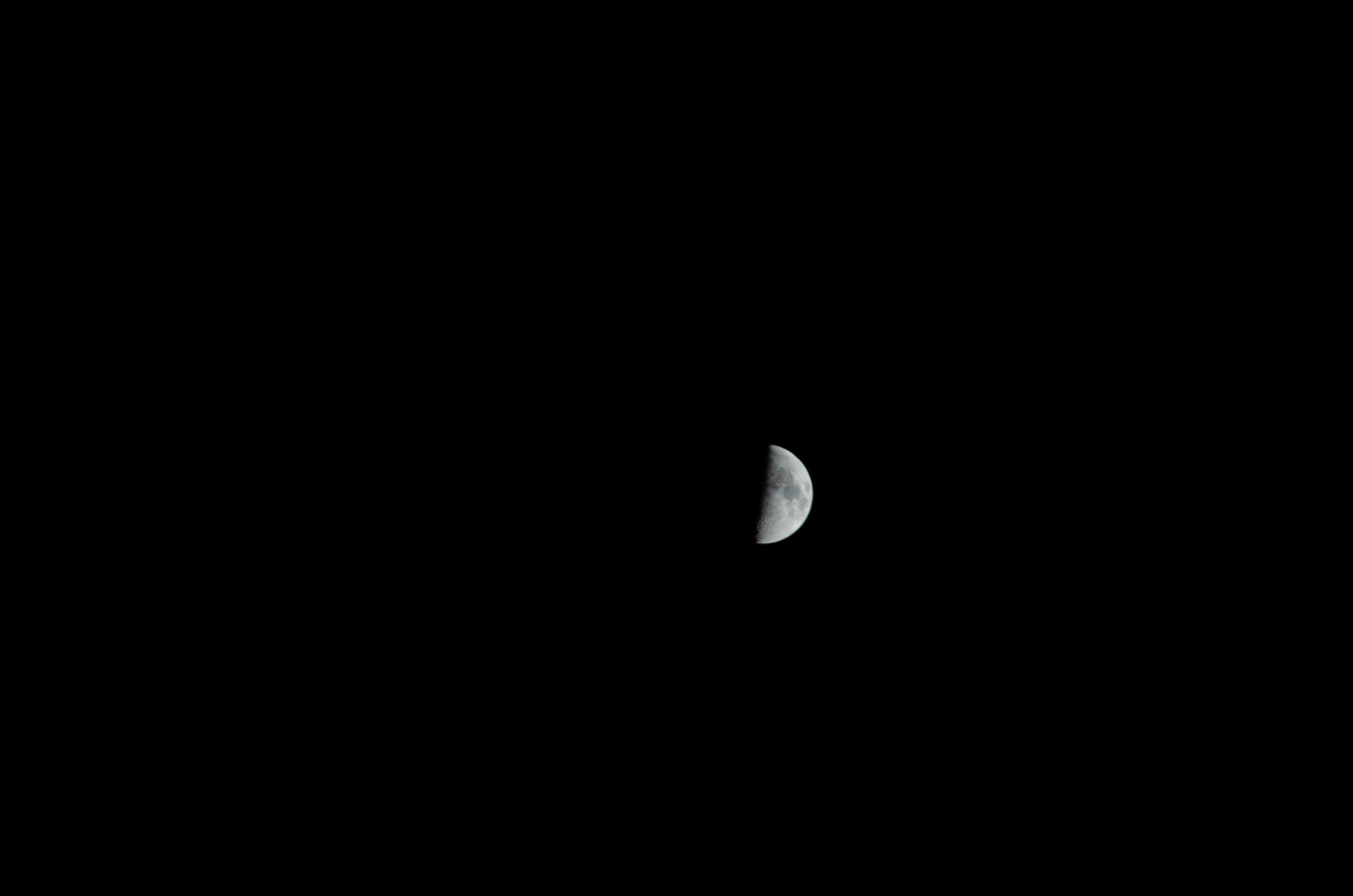
Don’t look too closely… It seems ok… zoom in… it’s a blur. Wow and I de-noised and sharpened the heck out of it. Oh and the best I could do was 200mm focal length. Which other web pages say is not long enough.
Auto Focus Fine Tune Saga Ends!
I have a D7000. I’ve taken thousands of shots with it, and have been basically happy. It’s only when I need to have sharp focus that I’ve been unhappy.
For one thing, I can’t manually focus the thing for beans. For another thing, seemingly it can’t auto-focus sharply for beans either. Well, at least with my 18-200mm lens.
I have spent hours playing with various ways to do AF fine tuning. Nothing really helped.
Until I read something. Last night I tried, but failed to get a sharp, manual, focus on the half moon. Couldn’t do it, and so I started searching around for info. Turns out the moon is pretty challenging to photograph, but one piece of advice stuck out. —-Remove the UV filter—- Gasp! Dare I?
So today I did it again… played around with AF Fine tune, failed, but then took the UV filter off, and turned off AF Fine tune… Uhm.. It worked.
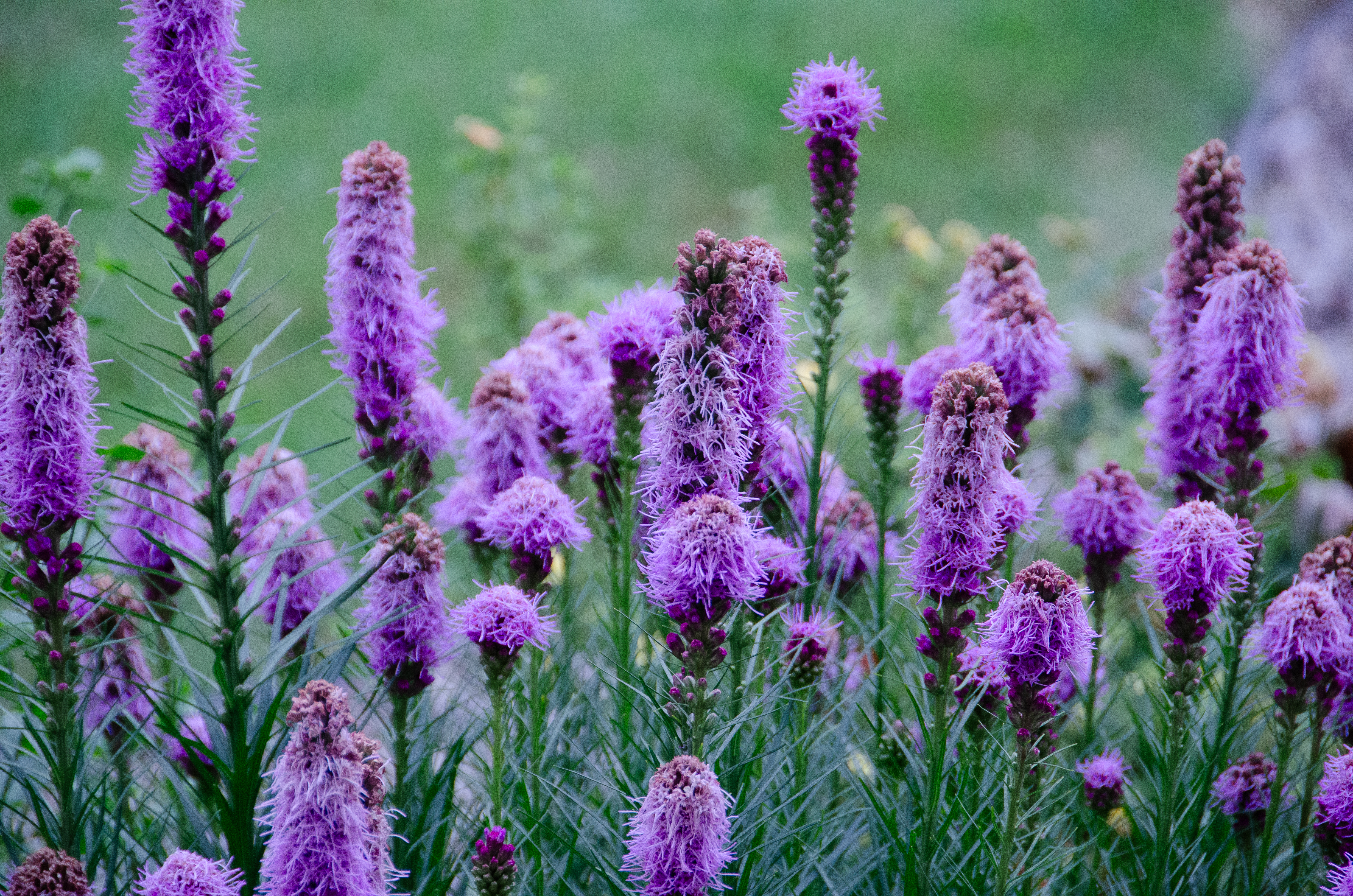
Well I was able to take these shots, which you may not agree are in focus, but for me, they are in the best focus I’ve gotten for these subjects. Zoom to 100% and they look fine… zoom a little further, and still ok… So that makes me happy. I’m done with AF fine tune.


 Stefanos's Blog